Why air conditioning produces water
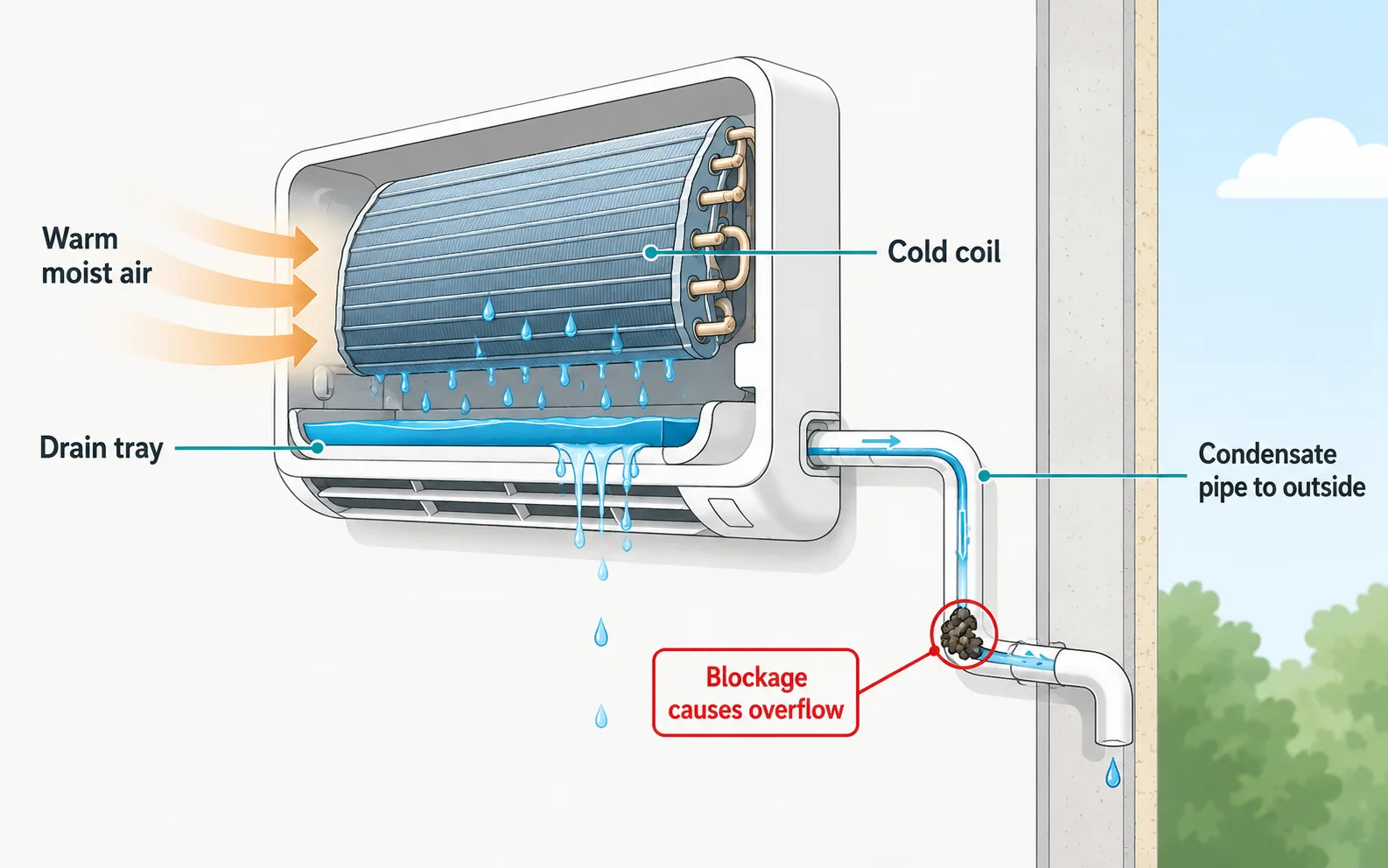
When your air conditioning cools a room, it does more than move air around. As warm air passes over the cold indoor coil, moisture in the air condenses into water, in the same way droplets form on a cold glass on a warm day. This is a normal part of how cooling works.
That water collects in a tray inside the indoor unit and drains away through a dedicated condensate pipe, usually running to the outside of your home. When everything is working as it should, you never see this water indoors.
Why leaks are common after winter
Many leaks appear the first time a system is switched back to cooling after the colder months. Over an idle winter, the condensate pipework can gather dust, dirt or debris.
When cooling restarts, that build-up can block the drain, so water backs up in the tray and spills into the room instead of draining outside. A summer heatwave makes this more noticeable, because the system runs harder and produces more condensate than usual.
- The first cooling run of the season after months of standstill.
- A blocked, kinked or poorly sloping condensate pipe.
- Dirty filters reducing airflow across the coil.
- A condensate pump that has not run since last summer.
- Debris blocking the outdoor drain outlet.
Water leak or refrigerant leak?
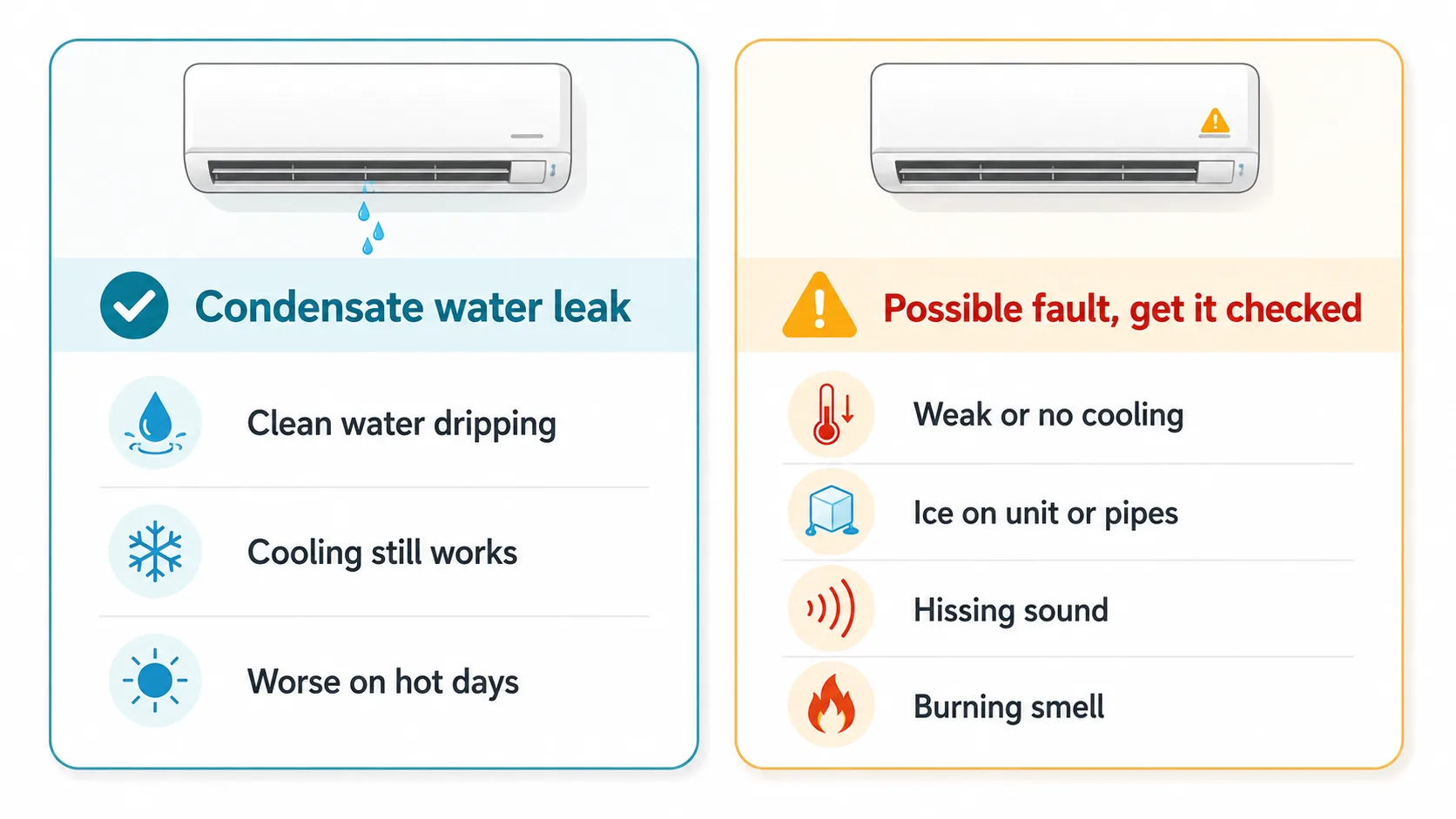
In the great majority of cases this is a water leak only, caused by blocked condensate drainage, and not a refrigerant leak or a dangerous fault. Clean water dripping from the indoor unit while cooling still works normally points to a drainage issue.
A refrigerant problem tends to behave differently. You would usually notice weak or no cooling, ice forming on the indoor unit or pipework, or a hissing sound, rather than clean water alone.
If you smell burning, see ice building up on the unit, or the system trips your electrics, treat it as a fault and arrange a professional visit rather than continuing to run it.
Condensate water leak
- Clean water dripping from the indoor unit.
- Cooling still works normally.
- Often more noticeable on hot days.
Possible refrigerant leak or fault
- Weak cooling or no cooling at all.
- Ice forming on the unit or pipework.
- A hissing sound from the system.
- A burning smell or tripped electrics.
What to do if your AC is leaking water
If your system is leaking water, the safest immediate step is to switch the affected unit off. This stops more condensate collecting and reduces the risk of water damage while you wait for a service visit.
- Switch the affected unit off at the controller.
- Place a towel or container underneath to catch drips and protect floors and furniture.
- Avoid running it in the hope the leak clears, as this risks further water damage.
- Note when the leak started and whether cooling still works, to help the engineer.
- Book a service or maintenance visit with a qualified installer.
How installers clear condensate leaks
During a maintenance visit, an engineer will usually clear and flush the condensate drain, clean the drain tray and filters, and check that the pipe has the correct fall or that the condensate pump is working.
They will then confirm the system is draining freely before handing it back. In most cases this is routine maintenance rather than a major repair.
Preventing leaks with regular servicing
An annual service, ideally before the cooling season begins, keeps drains clear and filters clean and reduces the chance of a surprise leak during the first warm spell.
Regular maintenance also protects the efficiency, reliability and warranty cover of your system, so it is worth scheduling before you need cooling most.
Common questions
Is a water leak from my air conditioner dangerous?
Usually not. Most leaks are clean condensate water from a blocked drain rather than a refrigerant leak or an electrical fault. If cooling still works and you only see water, a drainage blockage is the most likely cause. Treat it as a fault if you notice ice, a burning smell or tripped electrics.
Why is my air conditioner leaking water after I switched it to cooling?
After a winter of standstill, the condensate pipe can collect dust and debris. When cooling restarts, that build-up can block the drain, so water backs up in the tray and overflows into the room instead of draining outside.
Should I keep using my air conditioner if it is leaking water?
No. Switch the affected unit off to stop more water collecting and to limit the risk of water damage, then book a service. Running it in the hope the leak clears can make matters worse.
Can I fix an air conditioning water leak myself?
You can switch the unit off, catch drips and check for an obvious blockage at the outdoor drain outlet, but clearing and flushing the condensate system is best left to a qualified installer who can confirm it drains correctly.
How can I stop my AC leaking water in future?
Book an annual service, ideally before the cooling season, so the drain and filters are cleaned and the condensate route is checked before the first hot spell. Regular maintenance also protects efficiency and warranty cover.