The quick answer
A typical fixed home air conditioning installation uses an indoor unit in the room, an outdoor unit outside the property, insulated refrigerant pipework between them, a condensate drainage route, electrical work and final commissioning by a qualified installer.
In a straightforward UK house, one room may often be assessed as a relatively simple installation if there is a practical outside wall, a sensible outdoor unit position and a neat route for pipework and drainage. Multi-room installs, flats, conservation areas, leasehold homes, long routes and awkward access need more careful checking.
The example images below show how a tidy domestic installation can look in a fictional 1930s-style English semi-detached home. They are illustrative, so your installer still needs to confirm the safe position, clearances, drainage, electrics, noise and permission requirements for your property.
What this example shows
This walkthrough uses three example views: one outdoor unit on a rear or side wall, one indoor unit in a bedroom, and one indoor unit in a living room. Together, they show the basic choices most homeowners need to understand before comparing quotes.
The aim is not to prescribe an exact layout. The right design depends on room size, heat gain, wall construction, furniture, drainage, power supply, neighbours and access. A good installer should explain why the proposed route suits the home rather than treating every property as a standard package.
- Where the outdoor unit could sit without blocking airflow or access.
- How the pipe route can be kept tidy from inside to outside.
- Where indoor units can sit without blowing directly across beds or seating.
- What questions to ask before accepting a quote.
The outdoor unit
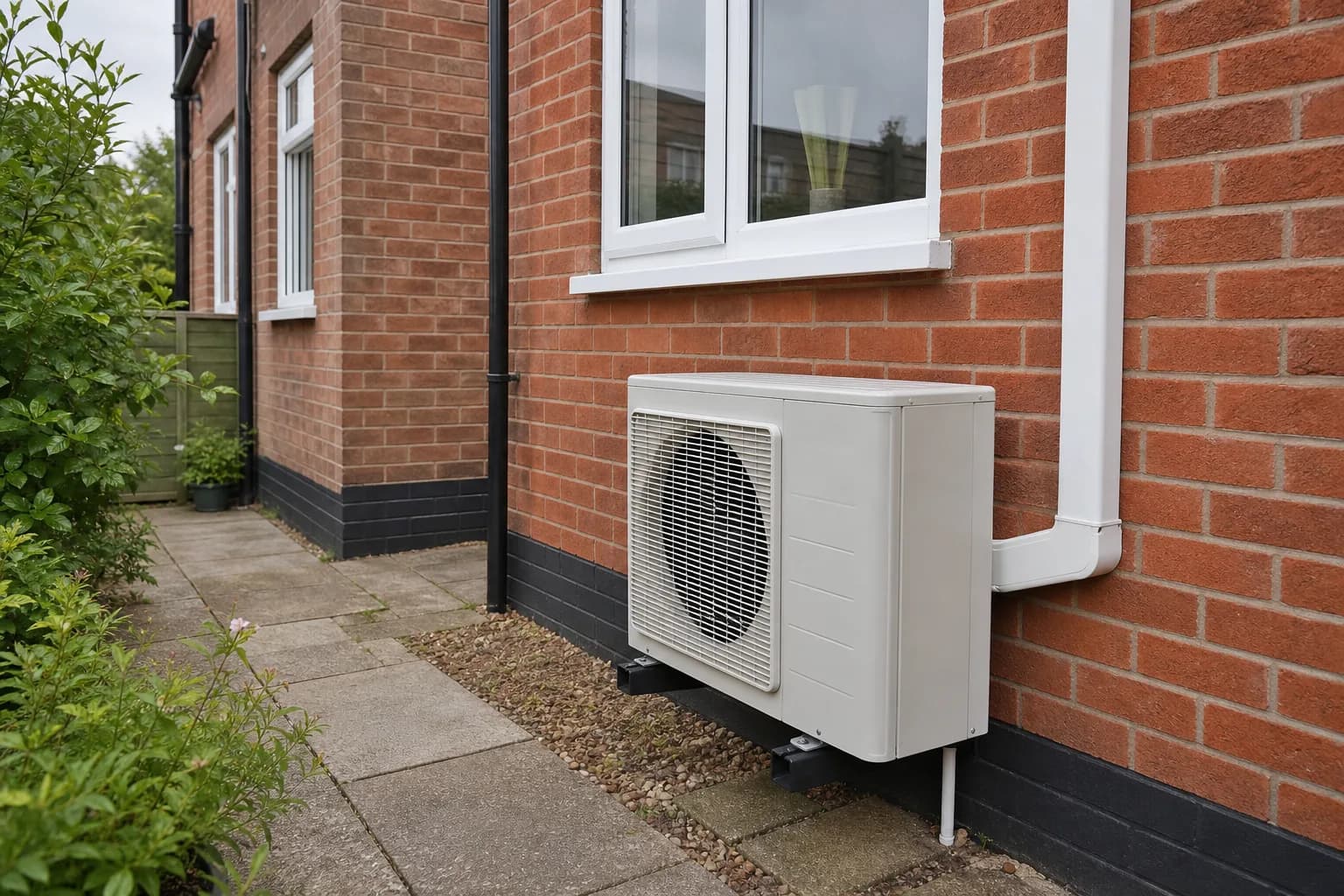
The outdoor unit is often the most important visual and practical decision. It needs open airflow, a secure wall bracket or stand, safe access for installation and servicing, and a position that limits noise, vibration and neighbour impact where practical.
In this example, the unit sits low on a brick wall with a neat external pipe cover. This kind of position can be simple to service and visually contained, but the installer still needs to check clearances, drainage, cable routes, wall condition and whether the location fits planning or consent rules.
- Ask how the unit will be mounted and whether vibration will be managed.
- Check whether the proposed position leaves enough airflow around the unit.
- Ask how future servicing access will work.
- Confirm where condensate water will drain in cooling mode.
- Check whether planning, leasehold or neighbour considerations apply.
The bedroom indoor unit
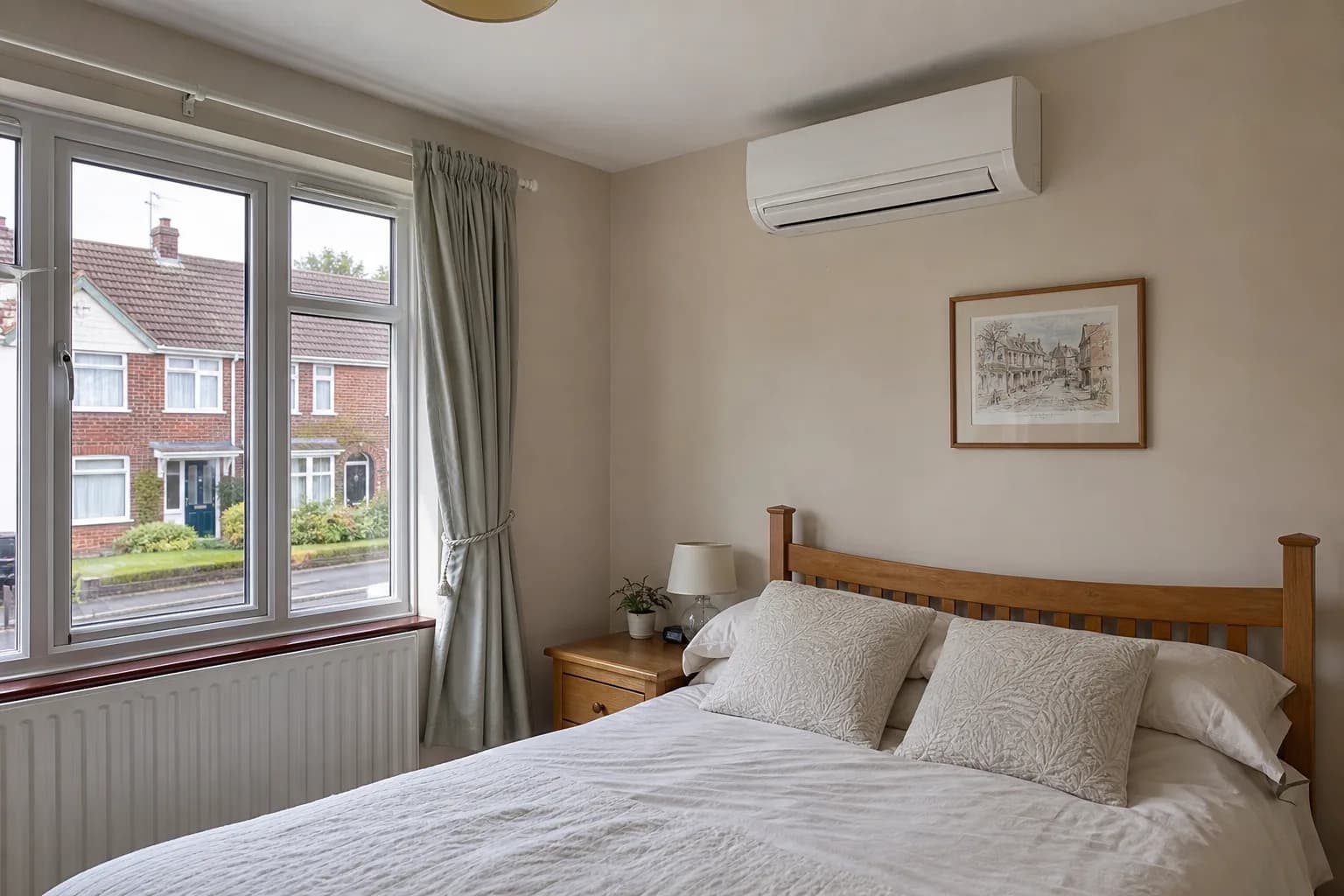
Bedroom installations need careful thought because comfort is about sleep, noise and airflow rather than only cooling speed. The indoor unit should be high enough to distribute air well, but positioned so it does not blow cold air straight across pillows.
In this example, the unit is fitted high on an external wall in a modest bedroom. The nearby outside wall would usually make the route easier to assess, but the installer would still need to check the pipe exit, condensate route, bed position, filter access and outdoor unit location.
- Ask whether the airflow can avoid the bed during sleep.
- Check whether the proposed model has quiet, night or sleep settings.
- Make sure curtains, wardrobes or shelves will not block airflow.
- Confirm whether a condensate pump is needed.
The living room indoor unit
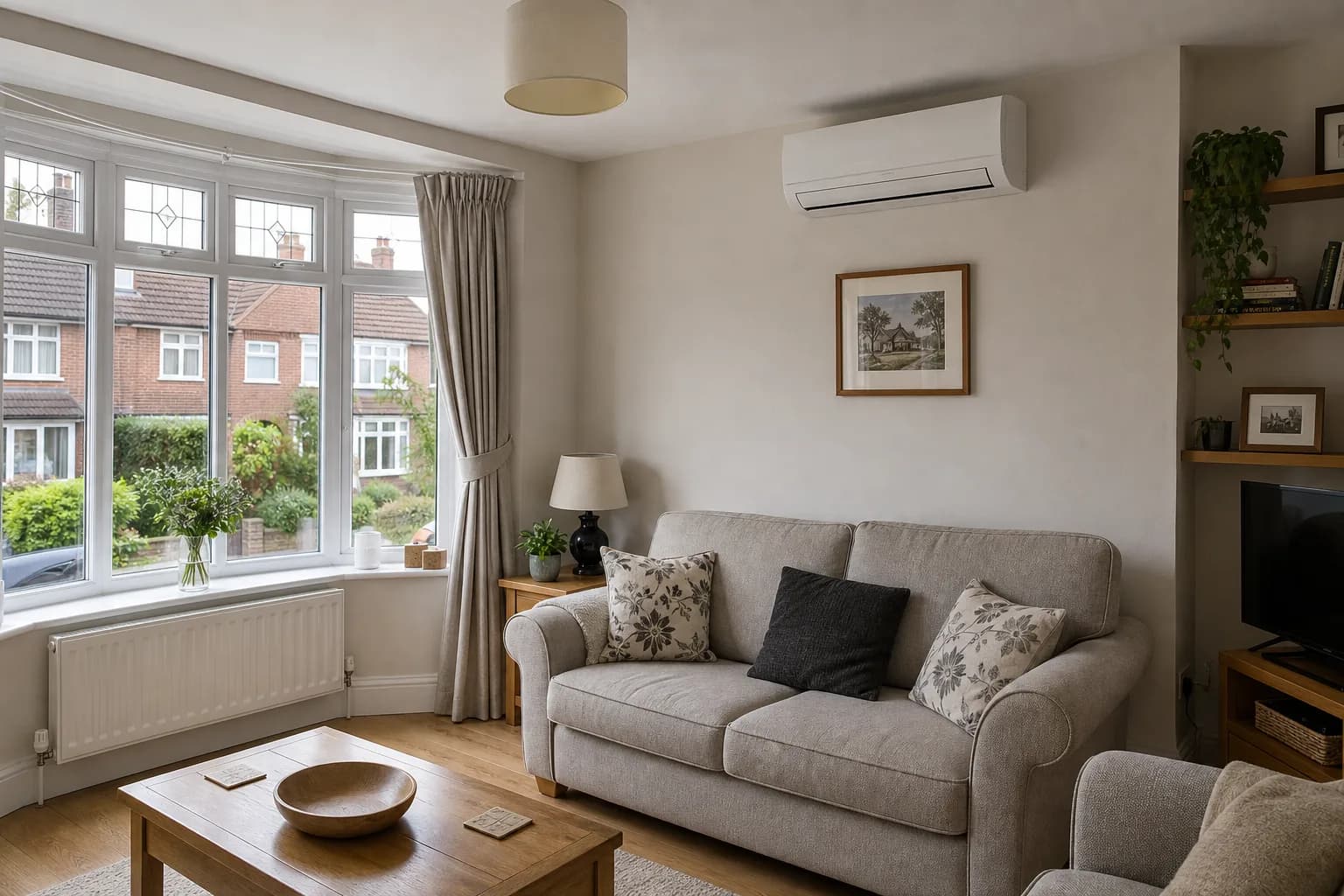
Living rooms often have more glass, more people and more heat gain than bedrooms, so sizing and airflow matter. A unit may need to handle afternoon sun, open-plan layouts, cooking heat or doors being opened more often.
The example living room shows a high-wall unit above the seating area. In a real quote, the installer should explain why that position works for comfort and noise, where the outdoor unit will sit, and how the system has been sized for the room rather than only the floor area.
- Ask how the installer has allowed for glazing, sun exposure and room use.
- Check whether airflow will feel comfortable for people sitting nearby.
- Confirm whether the route to the outdoor unit can be kept tidy.
- Ask what will be visible inside and outside after installation.
What installation day can involve
The exact sequence depends on the home and system, but most fixed installations follow a similar pattern. The installer confirms positions, protects the work area, mounts the indoor and outdoor units, routes pipework and cables, connects the drain, pressure tests and commissions the system.
There will usually be some drilling through an external wall, work near the outdoor unit position and a period when the room needs clear access. A good quote should tell you what furniture needs moving, whether making good is included and how long the work is expected to take.
- Confirm final unit positions before drilling starts.
- Keep access clear around the indoor wall and outdoor unit position.
- Ask where pipe covers, cables and drainage will be visible.
- Check whether electrical work and isolators are included.
- Expect a handover showing controls, filters, warranty and service advice.
Photos to send before comparing quotes
Clear photos help installers spot whether a job looks simple, needs a site visit or may have a permission issue. You do not need to design the installation yourself, but the right views make early advice much more useful.
If you request quotes through AC Journey, share the rooms you want to condition, possible outdoor unit positions and anything unusual about the property. That helps installers respond with fewer assumptions.
- Photos of each target room from two corners.
- A photo of the wall where the indoor unit might go.
- Photos of likely outdoor unit positions.
- A photo showing the route between the indoor wall and outdoor position if possible.
- A photo of the consumer unit if the installer asks for it.
- Notes on leasehold, listed building, conservation area or landlord consent concerns.
How to compare installation proposals
When quotes come back, compare the design as well as the price. A strong quote should make the proposed indoor unit, outdoor unit, pipe route, drainage route, electrical work and commissioning easy to understand.
Be careful with a quote that looks cheap but does not explain access, drainage, noise, permissions or making good. These details can affect the final cost and the finished appearance of the installation.
AC Journey does not install systems directly. We help homeowners compare quotes from vetted UK air conditioning installers so you can choose the approach that fits your home, budget and comfort goals.
- Does the quote show where units, pipework and drainage will go?
- Has the installer explained why the system size suits the room?
- Are electrical work, commissioning, warranty and VAT where applicable clearly covered?
- Are planning, consent or neighbour issues noted where relevant?
- Does the installer explain what will be visible once the work is finished?
Common questions
Are these photos from a real AC Journey installation?
No. The images are generated illustrative examples showing what a tidy installation can look like in a typical English home. They are not photographs of a real customer job or a guarantee that your installation will look the same.
How long does a typical home air conditioning installation take?
A straightforward single-room installation may often be completed in a day, but the timing depends on access, pipe route, drainage, electrics, commissioning and any complications found during survey. Multi-room or awkward installations can take longer.
Where should the outdoor AC unit go?
It needs a secure position with good airflow, safe access for installation and servicing, and sensible consideration of noise, vibration, neighbours and visual impact. The exact position should be confirmed by a qualified installer.
Can a bedroom AC unit be fitted above the bed?
Sometimes, but the installer should check airflow direction, noise, pipe route, drainage, filter access and comfort while sleeping. The unit should not create an uncomfortable draught across pillows.
Can a living room use the same type of indoor unit as a bedroom?
Often, yes, but the size and position may differ. Living rooms can have more glazing, sun exposure, people and heat gain, so the installer should size the system for the actual room and how it is used.
What should I ask before accepting an installation quote?
Ask where the indoor and outdoor units will go, how pipework and drainage will be routed, what electrical work is included, how the system has been sized, whether permissions need checking, and what warranty and servicing support are included.